




Introduction
For families looking to introduce children to the world of garment creation, the MindWare Run The Runway Fashion Design Kit presents a structured, hands-on entry point. Targeted at young creatives aged eight and up, this set is designed to move beyond simple paper dolls and into the realm of tangible, three-dimensional design. The kit is framed around a no-sew approach, aiming to lower the barrier to entry for children who may be interested in fashion but are not yet ready for needles and thread.
This review examines the components, the proposed workflow, and the intended user experience of this specific fashion design set, based solely on the provided product information.
Product Overview
The Run The Runway Fashion Design Kit is a comprehensive activity set intended to function as a miniature atelier for children. It is positioned as a “clothes designer kit” suitable for both girls and boys. The core premise is that children can construct outfits for mini mannequins using a variety of provided materials without needing to sew. The kit includes a guidebook that structures the learning process, moving from initial sketching to the final presentation of a completed look.
This is not a single-project kit; rather, it is a system that includes multiple mannequins and a large quantity of fabric, suggesting a focus on repeated use and iterative design. The inclusion of a sketchbook and a box that converts into a runway indicates that the product cycle is designed to include both the creation phase and a showcase phase.
What’s Included in the Box
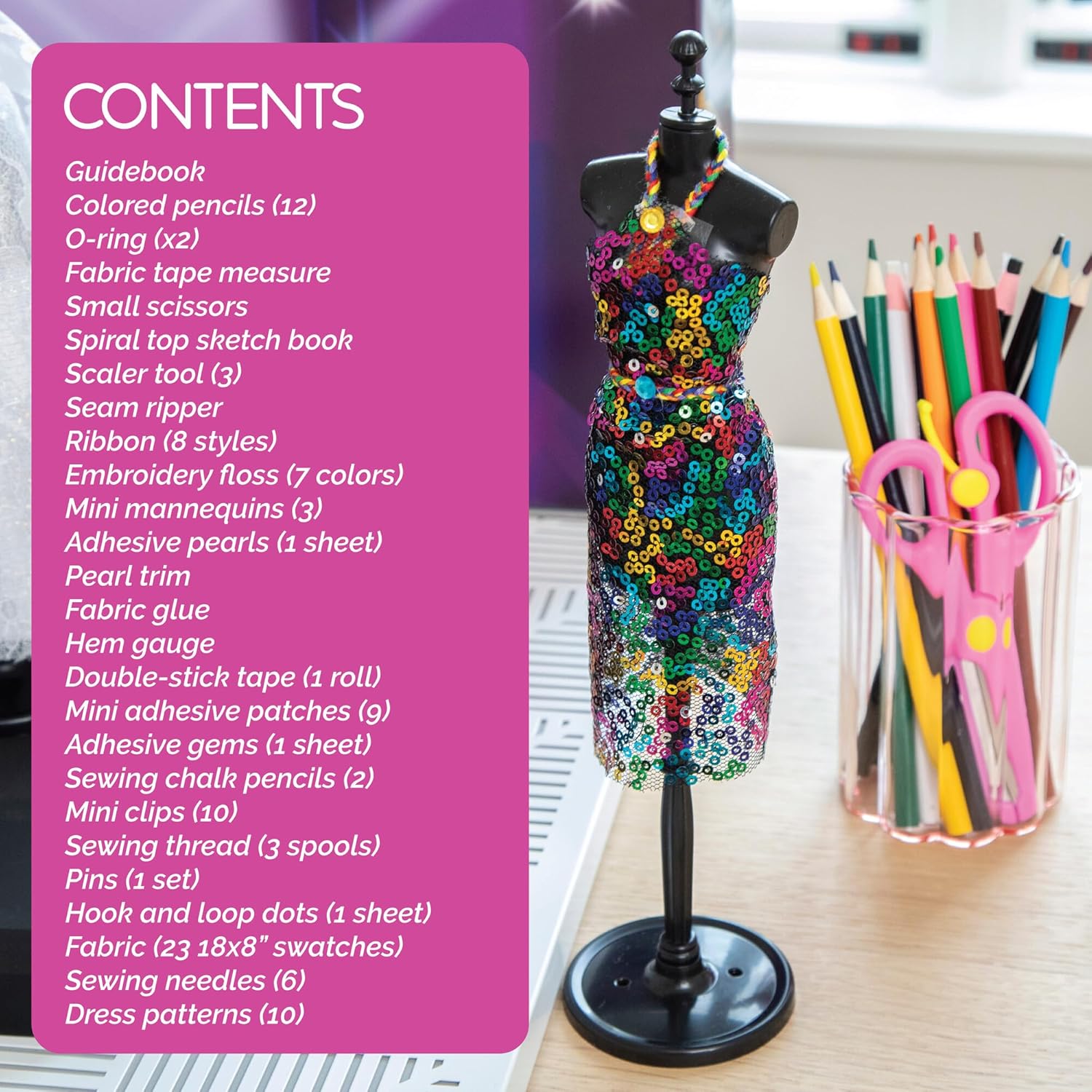
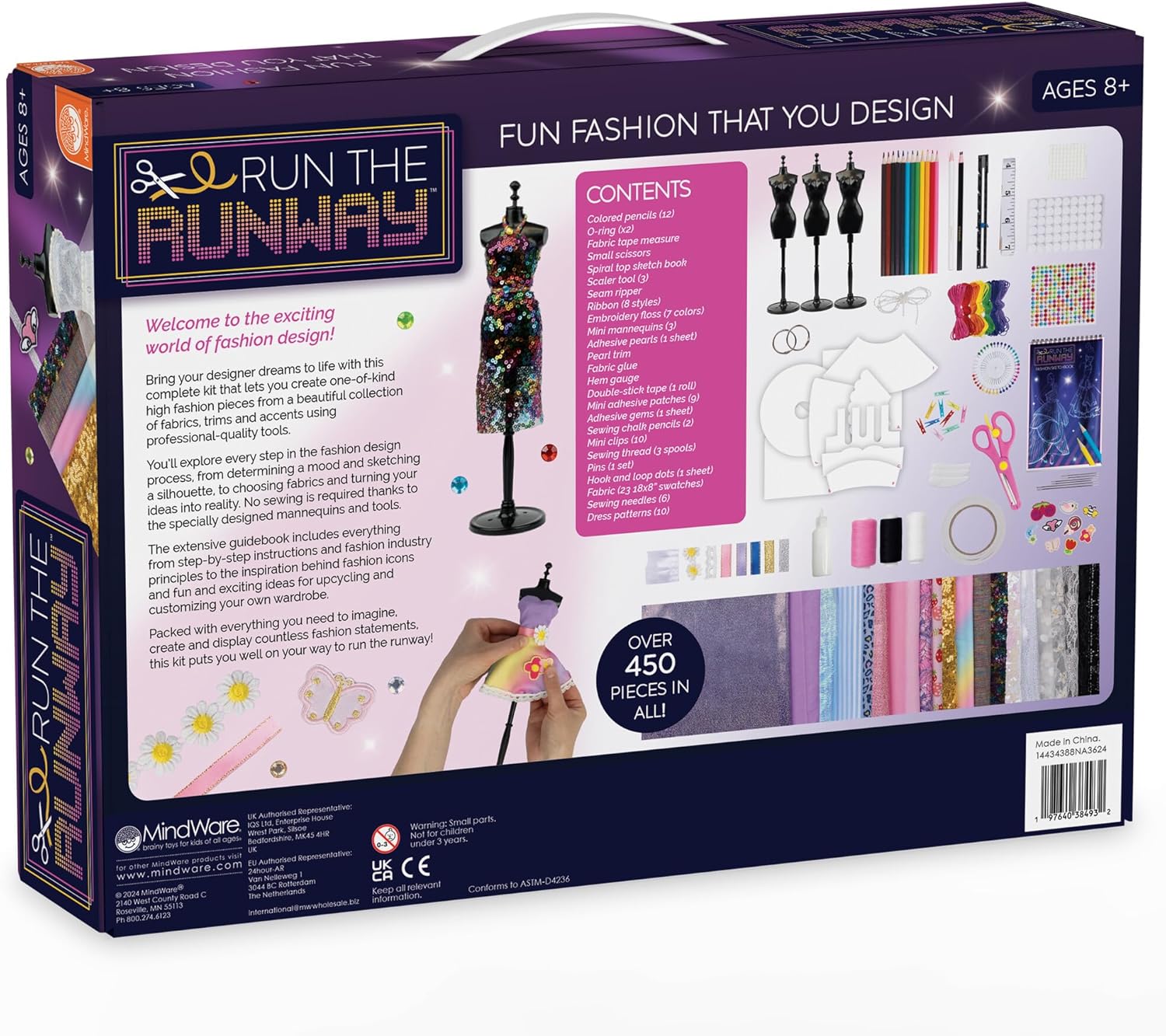
According to the product data, the kit contains a substantial array of materials. The specific components listed are:
- Over 450 pieces of fabric
- A sketch book for developing ideas
- 10 dress patterns
- Accessories for embellishment
- Essential design tools
- 3 mini mannequins
- A guidebook with step-by-step instructions and fun facts
The presence of 450 fabric pieces suggests a wide variety of textures, colors, and patterns for mixing and matching. The inclusion of three mannequins allows for the creation of multiple designs simultaneously or for a collaborative session where more than one child can work at a time. The guidebook is a critical component, as it is described as the primary instructional resource for the entire process.
Key Features and Specifications
The product information highlights several specific features that define the user experience. These are not general marketing claims but rather specific functional attributes of the kit.
No-Sew Construction Method: The primary mechanical feature is the ability to attach fabric to the mannequins without sewing. This is achieved through a “scaling tool” that pushes fabric into the backs of the mini mannequins. This method allows children to secure fabric in place, focusing on the aesthetic arrangement rather than the mechanics of stitching.
Structured Learning Guide: The kit includes a detailed guidebook that walks the user through the design process. The stated steps include sketching ideas, adding details, layering fabrics, and learning basic sewing skills. This structure is intended to teach a methodology, not just provide free-play materials.
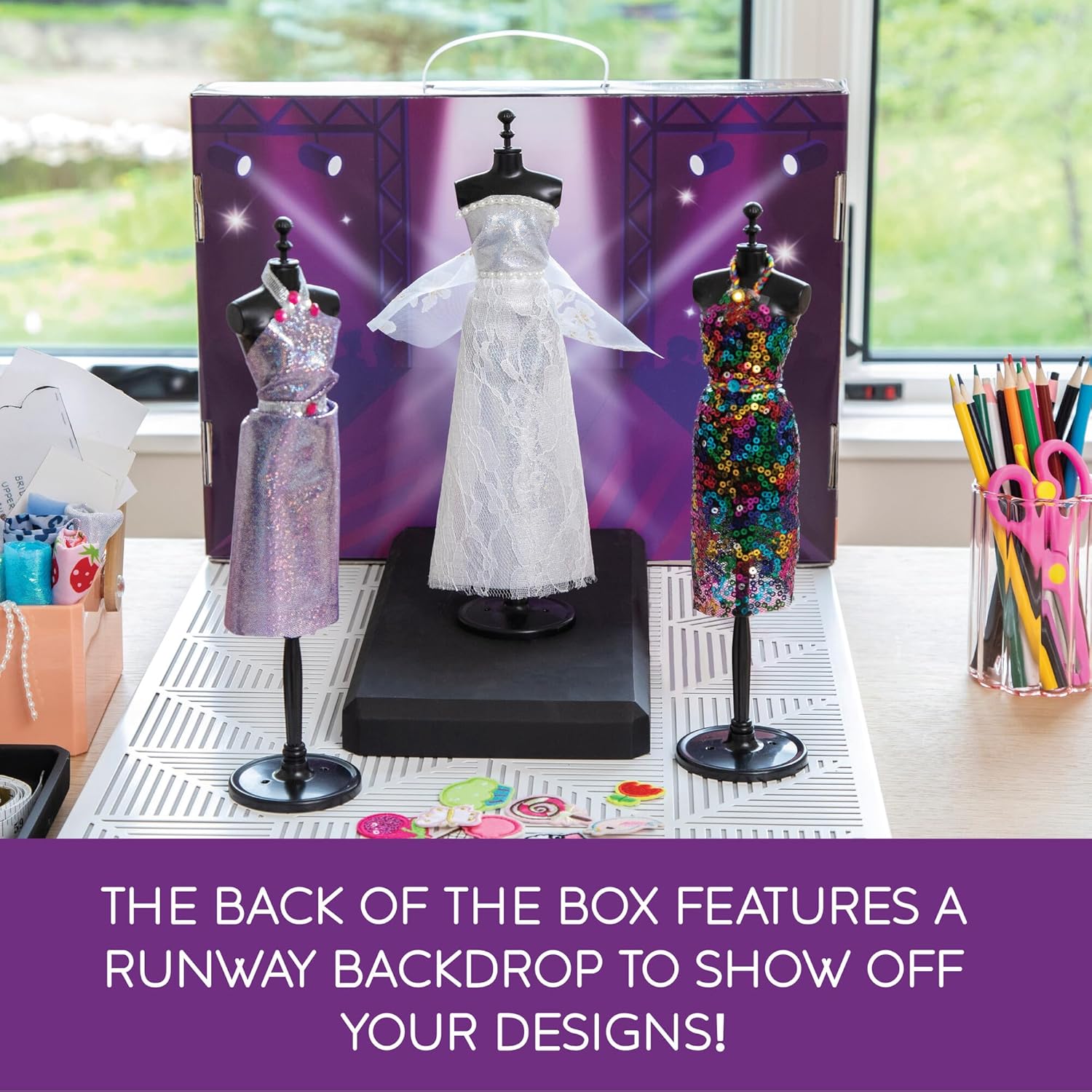
Runway Showcase Component: The packaging is designed to be dual-purpose. The box itself is intended to transform into a runway, providing a stage for displaying the finished mannequins to family and friends.
Design and Build
While specific material compositions of the mannequins and tools are not disclosed, the design logic of the kit is centered on accessibility. The mannequins are described as “mini” and are designed to accept fabric that is pressed into them. This indicates a specific material choice for the mannequin bodies that allows for friction-fitting fabric without damage.
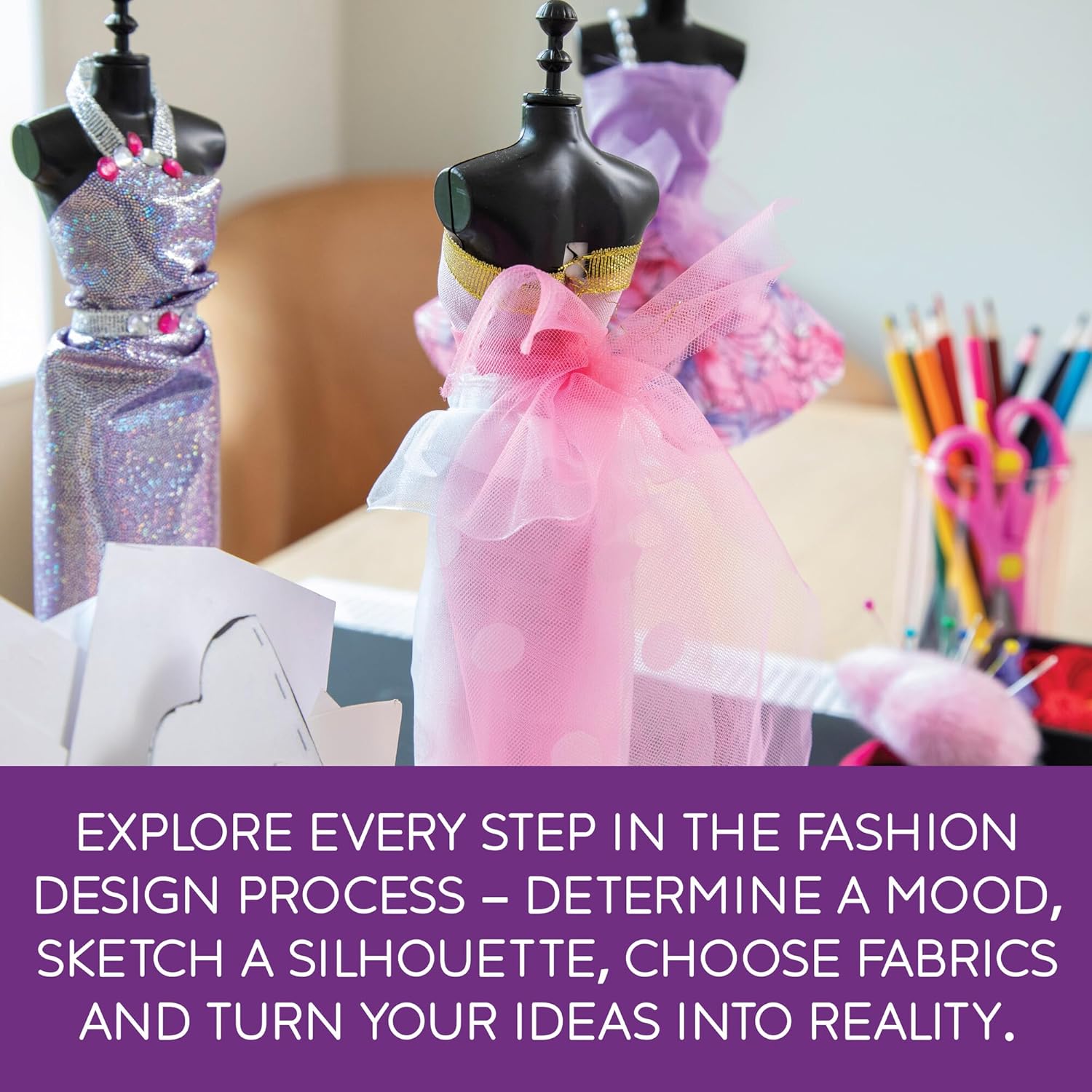
The kit is organized around a workflow that simulates professional fashion design principles adapted for children. The “measure in heads” technique and the use of mood boards are included as “cool design tricks” within the guidebook. This suggests that the educational content goes beyond simple craft and introduces users to industry-standard conceptualization methods.
The inclusion of a sketch book points to a design philosophy where planning precedes execution. Children are encouraged to sketch and color their outfits before translating them to the three-dimensional mannequin, reinforcing the connection between 2D illustration and 3D form.
Usage and Skill Development
The kit is explicitly designed for children ages 8 and up, and the product data states that no prior skills are required. This makes it accessible for beginners. The workflow described in the guidebook involves several distinct activities:
- Sketching and coloring original outfit ideas
- Selecting and layering fabrics to match the sketches
- Using the provided patterns to cut fabric pieces
- Attaching the fabric pieces to the mannequins using the scaling tool
- Learning introductory sewing techniques as an optional skill
This sequence allows a child to experience the full arc of a design project, from inspiration to a finished, displayable product. The kit introduces basic sewing skills through the guidebook, allowing children to advance their techniques if they choose, while the no-sew method ensures that the core creative process is not blocked by a lack of motor skill development.
Product Configuration and Purpose
The configuration of this kit is notable for its inclusion of multiple mannequins and a large number of patterns and fabrics. This setup allows for the creation of a cohesive collection or a “fashion show” lineup, aligning with the runway theme of the packaging.
The kit functions as an educational toy that teaches design principles. The stated educational focus includes:
- Sketching and idea development
- Fabric layering techniques
- Pattern following
- Basic sewing literacy
- Understanding proportions (measuring in heads)
As a gift item, the kit is positioned for children who are interested in clothing design. It offers a self-contained activity that does not require additional purchases to begin. The materials included are intended to support hours of imaginative play and repeated use, as the fabrics can be rearranged and the mannequins reused for new designs.
Summary
The MindWare Run The Runway Fashion Design Kit is a multi-component activity set for children aged 8 and up. It contains over 450 fabrics, 10 dress patterns, a sketch book, accessories, design tools, and 3 mini mannequins. The kit utilizes a no-sew attachment method, using a scaling tool to press fabric into the mannequins, while also introducing basic sewing skills through a step-by-step guidebook. The included guidebook outlines a complete design process, from sketching and creating mood boards to layering fabrics and presenting the final work. The product box is designed to convert into a runway for displaying finished designs. The kit is structured to provide a hands-on introduction to fashion design principles without requiring prior sewing experience.


